

If you’ve browsed the beer aisle at Aldi recently, you may have spotted SteinHäuser Lager, one of their low-cost imports with traditional German branding. At under 85p per 330ml bottle and brewed in accordance with the Reinheitsgebot (the German beer purity law), this lager promises a clean, no-nonsense experience for budget-conscious drinkers.
But how does it perform in the glass? And more importantly, how does it stack up against its supermarket competitors –Aldi’s Rheinbacher and Lidl’s Perlenbacher?
Let’s take a closer look at the history, pour, aroma, taste, and overall verdict.
Beer History: Where Does SteinHäuser Come From?
SteinHäuser Lager is brewed in Germany, reportedly by Dortmunder Actien Brauerei (DAB) – a brewery with deep roots in traditional German beer-making. It follows the Reinheitsgebot, which restricts ingredients to water, malt, hops, and yeast. This level of brewing discipline is uncommon in beers at this price point and suggests a level of quality control not always seen in supermarket lagers.
Rheinbacher, Aldi’s other go-to lager, is also brewed in Germany and enjoys a loyal following. It’s available as a pilsner and also as a weissbier, which offers more robust flavour notes. Meanwhile, Lidl’s Perlenbacher – though similarly styled – is typically brewed in Germany and is often met with mixed or underwhelming reviews.
The Pour: A Visual First Impression

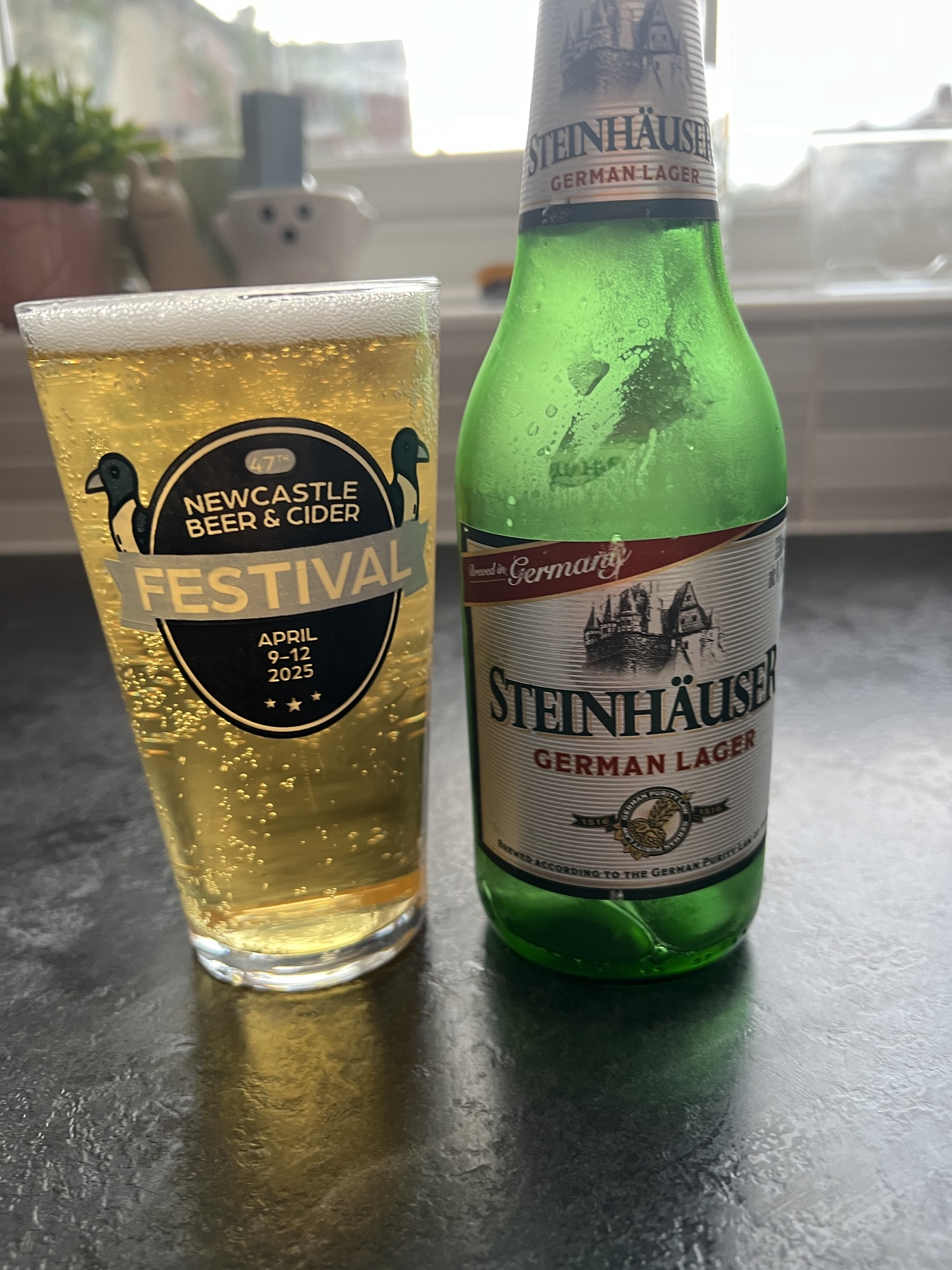
When poured into a glass, SteinHäuser Lager displays a pale golden hue with a bright and slightly hazy appearance. It produces a modest but respectable white head that settles into a light ring around the edge. The carbonation is lively and persistent, giving the beer a crisp, refreshing look that invites a first sip.
In contrast, Rheinbacher pours a cleaner, brighter straw gold and often forms a more stable and persistent head. Its clarity and effervescence lend it a slightly more premium feel. Perlenbacher, on the other hand, often underdelivers visually. The head disappears quickly and the beer tends to look flat or overly pale, which detracts from the overall experience.
Aroma: Light, Clean, and Inviting
On the nose, SteinHäuser offers a surprisingly crisp and pleasant aroma. A subtle zesty note—reminiscent of lemon peel or cracker malt—blends with a hint of sweetness and a whisper of herbal hops. While it won’t blow you away with complexity, it smells fresh, clean, and drinkable.
Rheinbacher’s pilsner version delivers a slightly more aromatic experience with a combination of light malt and floral hops. Its weissbier variety is notably more fragrant, with the signature banana and clove profile expected of a German wheat beer. Perlenbacher unfortunately doesn’t keep up. It often smells faintly stale or metallic, with little to no distinct hop or malt character to lift it.
Taste & Mouthfeel: Surprisingly Balanced
The taste of SteinHäuser continues the clean theme. The initial sip brings a soft malt sweetness, which transitions smoothly into a gentle bitterness on the finish. There’s a touch of lemon and dry cereal grain, followed by a crisp aftertaste. The mouthfeel is light and refreshing, with active carbonation that gives the lager a thirst-quenching quality.
Rheinbacher edges out SteinHäuser in flavour clarity and hop definition. Its pilsner version delivers a sharper finish and a cleaner bite, making it more ideal for those who like a drier, snappier lager. The weissbier, as expected, brings more body and complexity. Perlenbacher once again lags behind, with a taste profile that veers into overly sweet territory at the start and leaves behind a harsh, sometimes metallic bitterness. It lacks the refreshing character that defines a good lager.
SteinHäuser vs Rheinbacher vs Perlenbacher
Comparing the three side by side, Rheinbacher stands out as the most consistent and refined option. It’s brewed to a high standard, whether in pilsner or weissbier form, and offers a refreshing, balanced taste with an authentic German profile. SteinHäuser, while slightly less crisp and punchy than Rheinbacher, holds its own admirably. It offers great drinkability, a clean finish, and surprising quality for the price. It’s the kind of beer that won’t impress beer snobs, but will satisfy anyone after a crisp, cold lager.
Perlenbacher, despite being the cheapest of the three, is also the weakest. Its inconsistent pour, muted aroma, and less pleasant taste make it more of a filler beer—something you might buy in bulk for a party, but not one you’d savour.
In terms of value, SteinHäuser punches above its weight. While Rheinbacher remains the superior choice for overall flavour and finish, SteinHäuser confidently claims second place. Perlenbacher, sadly, is better left on the shelf unless cost is your only consideration.
Final Verdict: 3.25 / 5
SteinHäuser Lager earns a solid 3.25 out of 5. For a budget lager available at most Aldi stores in the UK, it delivers more than you’d expect. Its clean, balanced taste, authentic brewing origins, and easy-drinking nature make it a reliable option for everyday enjoyment.
There’s nothing particularly bold or adventurous about SteinHäuser, but it doesn’t need to be. It gets the basics right—taste, aroma, pour—and offers a better overall experience than many beers in the same price range.
Rheinbacher still holds the crown as Aldi’s best own-brand lager, but SteinHäuser deserves recognition as a worthy second. It’s a step above Perlenbacher in nearly every respect and a testament to how good a budget beer can be when it sticks to the fundamentals.
Summary: Is SteinHäuser Worth Buying?
If you’re looking for a no-frills, dependable lager for casual drinking, SteinHäuser Lager is absolutely worth your time. It’s brewed according to German standards, tastes far better than the average supermarket cheapie, and holds its own in a head-to-head comparison with bigger names. While Rheinbacherl remains the top choice for Aldi beer fans, SteinHäuser is a close and commendable runner-up.
Leave a Reply